Batch Printing Without the Bulk: A Practical Need in Pathology Labs

This topic may seem straightforward, but it reflects a practical challenge many pathology laboratories face every day. Batch printing is useful because it allows laboratories to label multiple slides or cassettes in a more organized and consistent way. For labs handling a growing number of specimens, this can reduce repetitive manual work and support better traceability.
However, batch printing also raises a very real question: where does the printer go? Pathology labs are not unlimited workspaces. Grossing stations, embedding areas, microtomes, staining equipment, computers, scanners, trays, and consumables all compete for bench space. A printer may improve labeling efficiency, but if it is too large, it can disrupt the same workflow it is meant to support. In this sense, equipment size is not just a design preference. It becomes part of the workflow decision.
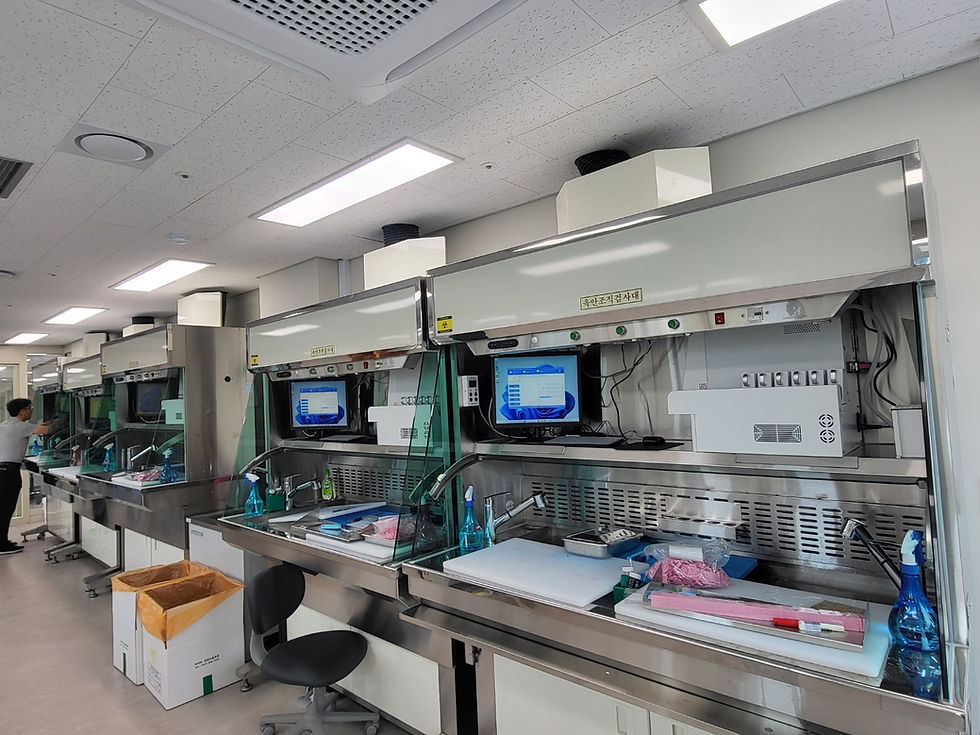
Another issue is that batch printing does not automatically eliminate workflow friction. In many laboratories, printed slides or cassettes still need to be manually collected, sorted, and transported back to the point of use. If the printer is placed far from the workstation due to the size, the time saved by batch printing may be partially offset by extra redistribution. The real question is not only whether a printer can print in batches, but where that batch output is produced and how easily staff can access it.
This is why compact batch printing matters. A pathology printer should provide enough capacity for routine slide and cassette labeling, while still fitting into the physical constraints of the lab. The goal is not simply to print more labels at once, but to make labeling easier to integrate into the existing workflow.
For many labs, especially those with limited bench space, a smaller printer can offer more flexibility. It can be placed closer to the point of use, whether near a grossing station or a microtomy workstation. This reduces unnecessary movement and makes printed labeling more convenient for daily use.

Batch printing also supports consistency. Compared with handwritten labels, printed labels can follow a standardized format and include barcodes, case numbers, and specimen information. This is important because pathology specimens move through multiple steps and multiple users. A label must remain clear, traceable, and readable throughout the process.
At Zenith Biomedical, we believe pathology printing should balance efficiency with practicality. Our slide and cassette printers are designed to support batch printing while maintaining a compact footprint that smaller than a coffee machine, helping laboratories improve labeling workflow without sacrificing valuable bench space.
For pathology labs, the best printing solution is not always the largest one. It is the one that fits the workflow, fits the workspace, and supports accurate specimen identification every day.


Comments