Pathology Labeling After WHX Miami 2026: Why Compact Printers Are Getting More Attention

This topic may seem small, but it reflects a practical question many pathology laboratories and distributors are thinking about today. After WHX Miami 2026, one thing became clear to us: many labs are not only looking for advanced technology. They are also looking for equipment that can fit into real laboratory workflows.

During the exhibition, we noticed that many visitors first became interested because of the compact size and clean appearance of our pathology printers. Some stopped by simply because the machines looked smaller and easier to place than traditional lab equipment. After that, the conversation quickly moved from appearance to workflow: where can this printer be placed, can it sit near the microtome, can it support slide or cassette labeling, and what's the printing technology here?
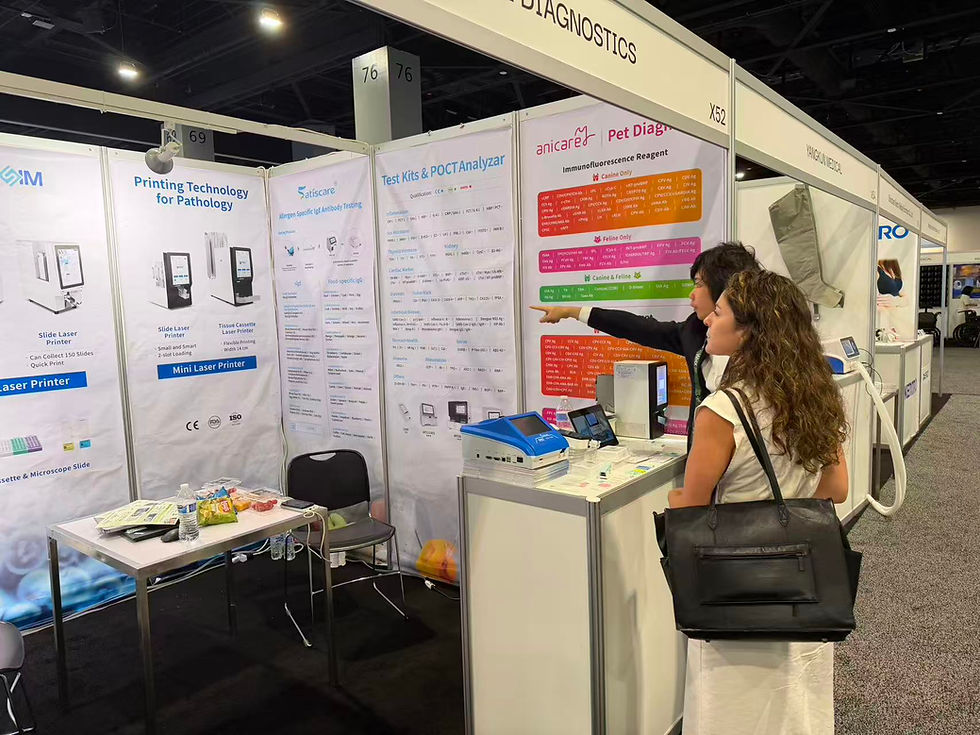
This reaction was important because it showed that size is not only a design detail. In pathology labs, size directly affects whether a device can actually be used in daily work.
Pathology laboratories are already crowded workspaces. Grossing stations, embedding centers, microtomes, staining equipment, computers, scanners, slide trays, cassette racks, and consumables all compete for bench space. A labeling solution may improve efficiency, but if it is too large or difficult to place, it may create new workflow problems.
This is why compact pathology printers are becoming more relevant. A small slide or cassette printer can be placed closer to the point of use, such as near the microtome or grossing area. This helps reduce unnecessary movement and makes printed labeling easier to integrate into daily work.
Another reason is the growing need for machine readable identification. As pathology labs move toward digital pathology and barcode based tracking, handwritten labels are becoming less suitable. A technician may be able to read handwriting, but a scanner or information system cannot reliably capture it.

Printed labels can include clear text, case numbers, barcodes, and QR codes. This helps connect the physical slide or cassette with patient information, specimen records, and digital image files. In this sense, labeling is not just a printing step. It becomes part of the traceability system.
For distributors, compact pathology printers also create a practical opportunity. Large centralized systems may require bigger budgets, more space, and more workflow changes. For comparation, large centralized is on average $2000-$4000 more expensive than compact printers. Smaller printers are easier to demonstrate and easier for many labs to consider as a first step toward standardized labeling.
At Zenith Biomedical, our focus is not only on printing technology, but on practical workflow fit. Our mini pathology printer series is designed to support slide and cassette labeling while maintaining a compact footprint. The goal is to help laboratories move from handwriting to standardized, machine-readable identification without sacrificing valuable bench space.
For pathology labs, the best labeling solution is not always the largest or most complex one. It is the one that fits the workflow, fits the workspace, and supports accurate specimen identification every day.


As someone who manages histology operations, I can attest that a small equipment footprint is critical in today's pathology laboratories. Bench space is at a premium, especially at microtomy where we need to integrate scanners and slide printers with the standard microtomes and water baths. A printer may have excellent features, but if it can't fit naturally into the workflow, adoption becomes much more challenging. Another key consideration is the ability to support both H&E and IHC workflows. Most labs require dual functionality, with reliable printing for two slide types, routine and plus slides.
Ultimately, laboratories need solutions that balance functionality and space efficiency.